12:41 PM, Thursday, 25 June 2026
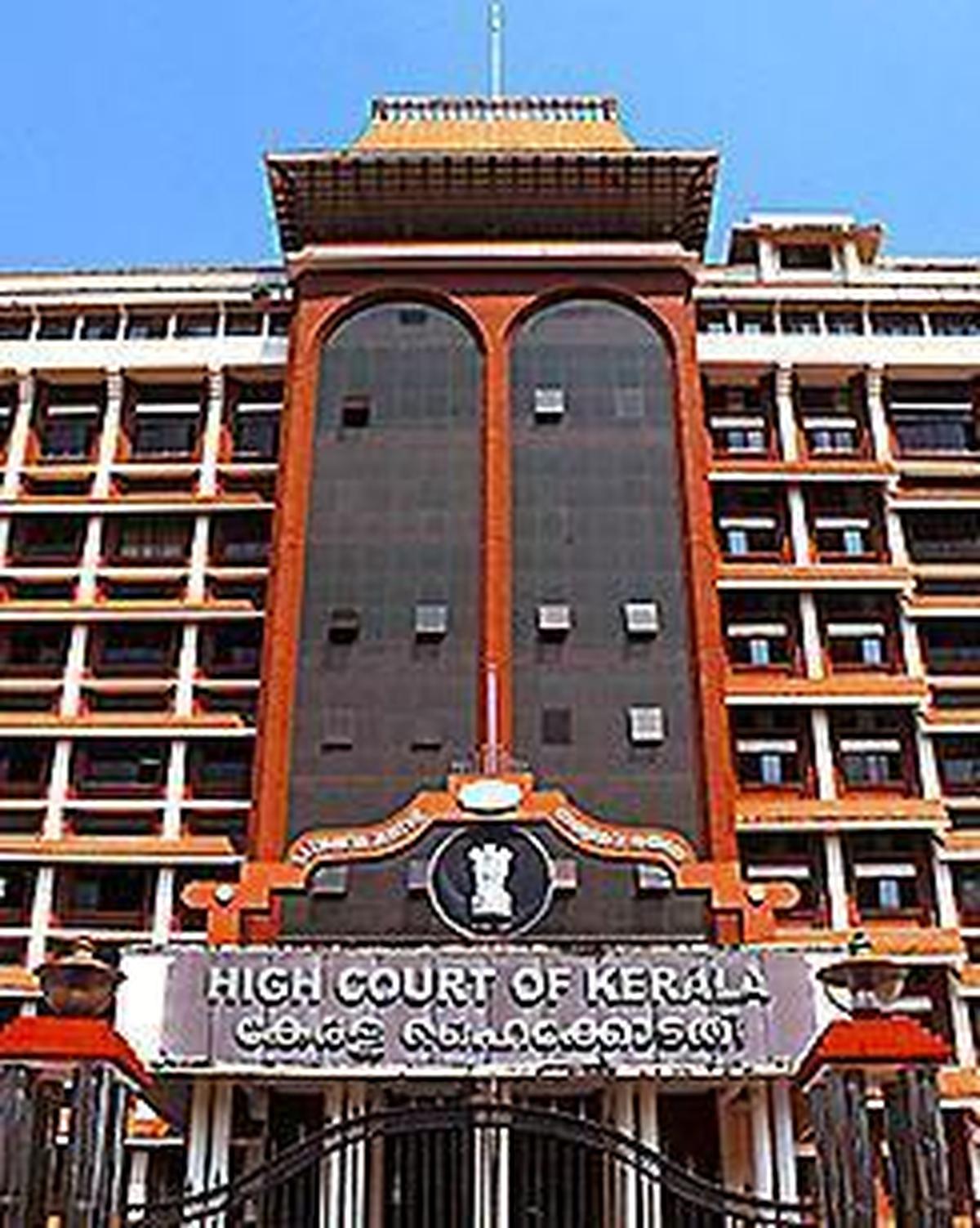
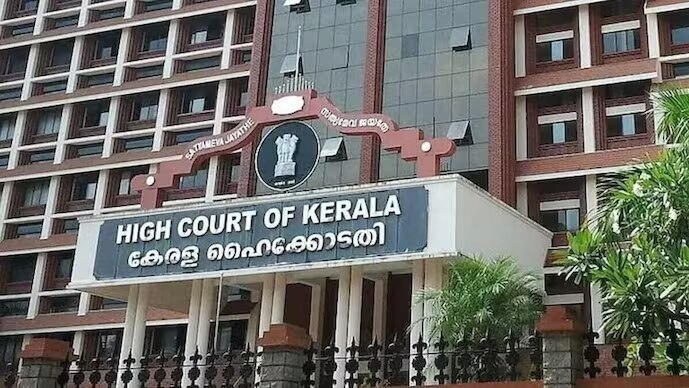
The Kerala High Court has issued directions to the Ministry of Road Transport and Highways (MoRTH) to conclude the approval process for the Vizhinjam-Navaikulam Outer Ring Road project, considering the ‘serious hardship’ of the owners of the land acquired for the project.
The court, on June 23, granted 45 days to V. Umashankar, the secretary, MoRTH, to finalise the approval proceedings, directing that there should be earnest efforts to alleviate the hardship of the landowners and disburse the compensation for the acquired land as soon as possible.
Mr. Umashankar appeared before the Single Bench of Justice C. Jayachandran and provided a chronology of events, citing the reasons for the delay. The matter is now pending before the Ministry of Environment, Forest and Climate Change for environmental clearance and before the Ministry of Finance for financial sanction. Upon receipt of these approvals, the matter will be placed before the Cabinet for consideration, he said.
The petition was filed by the Vizhinjam ORR Land Owners Welfare Movement, alleging that no compensation had been paid to the owners of the land acquired for the project, even though the acquisition was formally declared in 2023.
12:40 PM, Thursday, 25 June 2026
A public interest litigation was recently filed before the Kerala High Court seeking urgent intervention to restore the access road leading to the Arookutty Community Health Centre in Alappuzha.
The petitioner, a resident of Arookutty, stated that the damaged condition of the road ‘severely hinders’ ambulance movement, especially in adverse weather, and affects health care access to the elderly, pregnant women, schoolchildren, and emergency service users.
Representations had been submitted before the Public Works department, District Collector, and District Medical Officer by the petitioner, calling attention to the condition of the access road, and requesting remedial measures. Further, the petitioner submitted that the grievance was acknowledged by the District Medical Officer, Alappuzha, and that it was forwarded to competent authorities for necessary action.
The plea alleged that despite repeated representations to the authorities concerned, no effective remedial action was taken and that it violated the public’s right to life and health. It was submitted that the issue was not an ordinary road maintenance dispute; it concerned the principal access road to a functioning community health centre catering to the health care needs of the local population
05:40 AM, Thursday, 25 June 2026
Vishva Hindu Parishad (VHP) international president Alok Kumar on Wednesday (June 24, 2026) has called for a comprehensive investigation and an FIR into allegations of irregularities in donations collected for the Ram Janmabhoomi temple, saying those found guilty should face the strictest legal action.
VHP took to X, sharing Mr. Kumar’s demands.
“FIR should be filed at the first place. Then investigation needs to be expedited and fast rack court should take-up the matter on day to Day basis,” he said, adding that guilty persons must get punishment.
Speaking to media earlier this week, Mr. Kumar had said that inquiry in the alleged donation row should be allowed to proceed without attempts to defame individuals or institutions before its conclusion. He noted that millions of families had contributed to the temple and described the donations as “pious money”.
Expressing satisfaction over the Shri Ram Janmabhoomi Teerth Kshetra Trust’s request for an inquiry, Mr. Kumar said the Special Investigation Team (SIT) had already begun its work in Ayodhya. He added that trust general secretary Champat Rai had appeared before the SIT and accepted responsibility for matters under his charge.
The Uttar Pradesh government constituted a three-member SIT on June 14 following a request from the temple trust. The panel comprises Lucknow Divisional Commissioner Vijay Vishwas Pant, IG Kiran Singh and Finance Department Special Secretary Neel Ratan, who have been tasked with submitting its reports expeditiously.
05:38 AM, Thursday, 25 June 2026
Observing that “the arc of justice must extend even to those who cannot approach the courts themselves”, the High Court of Karnataka set aside a trial court order directing that nine abused dogs be handed back to their alleged tormentor during the pendency of the investigation. It called the order “preposterous to say the least” and one that “shocks the conscience of the court.”
Justice M. Nagaprasanna passed the order while allowing a petition filed by the People for Ethical Treatment of Animals (PETA), which had challenged a metropolitan magistrate court’s April 25, 2026, order allowing the plea of Ramesh, the owner of the dogs, to have the animals — six Golden Retrievers and three Shih Tzus — handed back to his custody.
Oral complaint
PETA, acting on an oral complaint from a neighbour of the dog owner, had lodged a complaint with the Peenya police, who registered a First Information Report on February 15 against the owner for alleged cruelty, including repeated beatings and sexual abuse of the animals.
“A perusal of the magistrate court’s order shocks the conscience of this court,” the High Court said after examining video evidence and photographs, which it said depicted the owner repeatedly beating the dogs and treating them “like chattels that he can deal with as and how he wants.”
The High Court also expressed bewilderment over how the lower court could justify returning the animals to the alleged perpetrator while the investigation into the allegations was still under way.
Entitled to dignity
Pointing out that the law now recognises animals as living beings entitled to dignity, compassion and protection from cruelty, the High Court observed: “The measure of a civilised society is often reflected not merely in how it treats its fellow humans, but in how it extends mercy and justice to the voiceless creatures that inhabit its shared world. Therefore, every act of cruelty against an animal is not merely an injury to a sentient being, but a blemish on the collective human conscience.”
The High Court had ordered that the dogs be retained in the custody of animal welfare organisations, where they have been sheltered since their seizure, pending completion of the probe.
05:37 AM, Thursday, 25 June 2026
The Delhi High Court on Wednesday said it will pass an order on June 29 on whether to cancel the bail granted to the 57-year-old caretaker accused of raping a three-year-old girl inside a private school in west Delhi. A Vacation Bench of Justice Vinod Kumar reserved its verdict on the petitions by Delhi Police and the complainant against the trial court’s May 7 order releasing Lalit Kumar on bail in the case registered under the Protection of Children from Sexual Offences (POCSO) Act.
Additional Solicitor General S.V. Raju, appearing for the police, urged the court to cancel the bail, contending that it was not a case in which the trial court should have granted a reprieve to the main accused.
Meanwhile, Aam Aadmi Party Delhi president Saurabh Bharadwaj on Wednesday alleged that Mr. Kumar’s son had threatened the rape survivor’s mother.
“A deeply shocking incident has taken place. Today, at the Delhi High Court, the mother of a three-year-old rape survivor alleged that she was threatened by the accused’s son. The son of the 57-year-old accused threatened that she would face the same fate as her three-year-old daughter.”
05:36 AM, Wednesday, 24 June 2026
The Telangana High Court on Tuesday instructed the secretaries of the district legal services authority of both Nalgonda and Suryapet to furnish a report on the proceedings and steps taken for protective custody of a two-year-old child who was rescued by authorities after busting a child trafficking racket.
The order was passed by the HC while hearing an appeal filed by M. Venkanna who adopted the child before she was rescued by the authorities. He challenged the order of a single judge who declined to grant the custody of the child to him, observing that he did not adopt the child from the latter’s natural parents but was procured through a middle man for some consideration.
A division bench comprising Chief Justice Aparesh Kumar Singh and Justice G.M. Mohiuddin, hearing the appeal petition, said the repot to be submitted by the DLSAs should comprehensively indicate as to whether the procedure and measures contemplated under the Juvenile Justice Act-2015 were being followed in the child case. The bench said the report should also comprise details of the other children kept in Shishugruha of Nalgonda under the protective custody following the orders of the Child Welfare Committee.
The DLSAs should explain if there are any such Homes functioning in Suryapet as per the JJ Act. The report should be furnished within two weeks. Earlier, the bench said the remarks column in the Abstract Register submitted by the Nalgonda Child Protection Officer showed the Social Investigation Report (SIR) was done on June 13 of 2025.
However, it did not mention the date on which the instructions were given to the social worker concerned to conduct SIR in respect of the two-year-old child. The SIR also did no mention when it was prepared. It was the basis on which the CWC would form an opinion for the rehabilitation of a child.
05:30 AM, Wednesday, 24 June 2026
Expressing its concern over the threat to the marine environment posed by the presence of hazardous cargo such as plastic nurdles, calcium carbide and other hazardous cargo within the containers of MSC Elsa 3, which sank off the Alappuzha coast in May 2025, the Kerala High Court on Tuesday orally asked why the concerned government agencies had done little over the past year to implement pollution containment measures.
There is lack of clarity regarding the environmental and safety risks posed by the vessel’s wreck lying on the seabed, the court said, observing that reports submitted before the court do not match the claims made by the shipping company.
A Division Bench of Justice Raja Vijayaraghavan. V and Justice K.V. Jayakumar sought an action plan from the Centre to tackle the threat to the marine environment arising from the hazardous and other cargo contained in the over 600 containers the ship was carrying at the time of its sinking.
The HC had on June 16 directed the learned Additional Solicitor General to obtain specific instructions from the Centre and the concerned agencies to place before the court a detailed status report stating the measures already undertaken, the steps proposed to be taken, the timelines envisaged for such action, and the status of compliance with the concerns highlighted by the court.
Action plan
Subsequently, it was submitted before the court on Tuesday that the Ministry of Environment, Forest and Climate Change (MoEFCC) has been impleaded in the case. The respondents, including the MoEFCC, the Director General of Shipping, and other Central government agencies concerned, propose to convene a meeting to deliberate upon the issues pertaining to marine pollution. The Centre submitted that a comprehensive and positive action plan, in conformity with the directions issued by the court, would be submitted within a period of two weeks, after which the court posted the matter for next hearing on July 14.
Stating that protecting the coastal environment is the Union Government’s responsibility, the court also expressed concern at a container carrying calcium carbide lying outside the wreck and was secured only by cargo straps. Strong monsoon waves could dislodge it and wash it ashore. It directed that the Indian Coast Guard, the Directorate General of Shipping (DGS), the ship’s owner firm – MSC, and other concerned agencies to assess the status of the containers that were on the vessel and to report whether they were secure.
The court warned that plastic nurdles from the damaged containers could affect marine ecosystems, especially since fishes might ingest the plastic, affecting seafood exports. The Centre submitted that the Department of Earth Sciences had been approached for assistance, as it is currently the only agency equipped to conduct deep-sea examinations.
05:29 AM, Wednesday, 24 June 2026
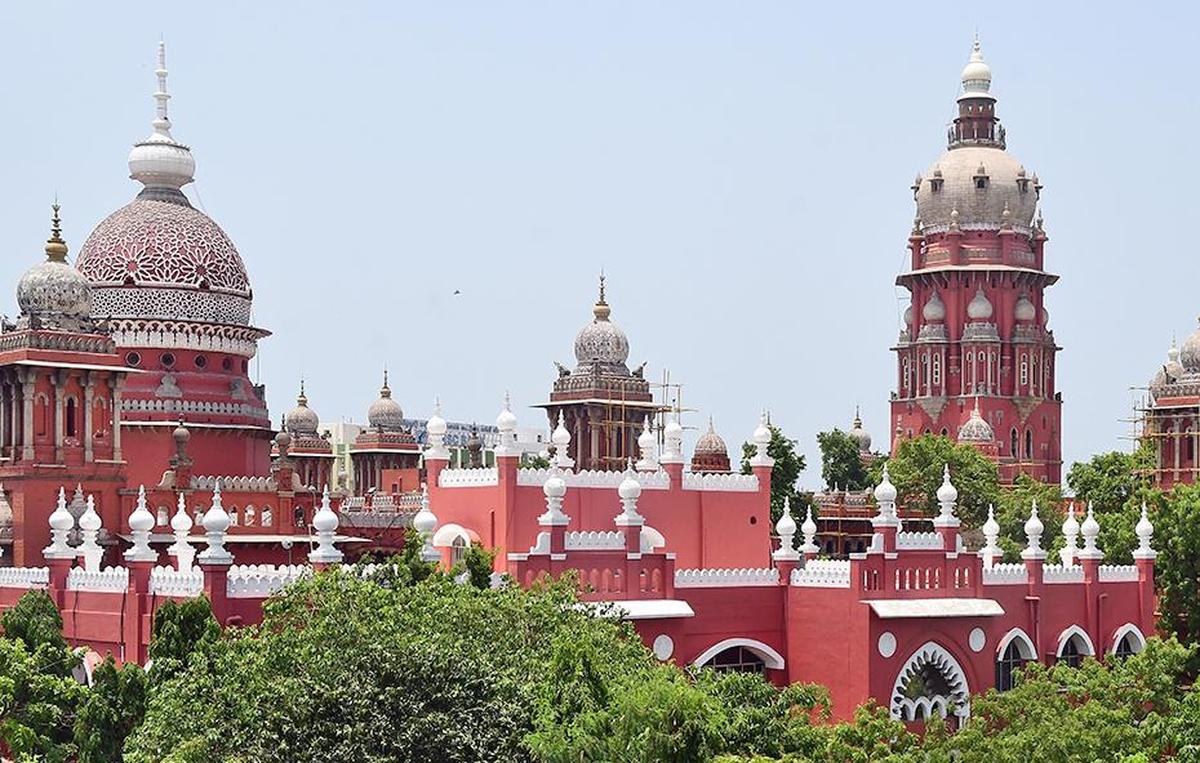
Farmers across the State frequently complain of acute shortage of labour for agricultural operations. It may be worthwhile to examine whether a suitable framework could be devised for productive engagement of the MGNREGA scheme workers in the agricultural sector, the Madurai Bench of the Madras High Court has said.
Justice B. Pugalendhi said such a model could also involve sharing wage burden between the government and the farmer, thereby ensuring employment for workers, addressing the labour shortages faced by farmers and reducing the overall burden on the public exchequer.
The court said the purpose of such an arrangement need not be to confer any right to permanent employment. The distinction between engagement under a welfare scheme and appointment to public services would continue to remain. At the same time, the availability of labour under the MGNREGA scheme may be channelled towards activities that directly contribute to agricultural production and rural economic growth.
It is relevant to note that the government intends to replace the MGNREGA Scheme with the Viksit Bharat-Guarantee for Rozgar and Ajeevika Mission (Gramin) Scheme. The new scheme has been introduced with the objective of expanding livelihood security and establishing a rural development framework. Therefore, such a framework for engagement of workers in the agricultural sector could be considered when framing rules and guidelines under the scheme, the court said.
The practical modalities, eligibility conditions, safeguards against misuse, extent of mechanisation, ensuring protection of workers’ interests and monitoring mechanisms are matters that would fall within the domain of policy makers and experts in the field, the court said.
The court said the public welfare programmes must evolve with changing economic conditions, technological advancements and ground realities. If technology can efficiently perform certain categories of work, and if there exists a simultaneous shortage of labour in other productive sectors such as agriculture, it may be worthwhile for the policy makers to explore whether available human resources could be utilised in a manner that better serves the interests of workers, farmers and the rural economy as a whole.
The court made the observations while disposing of a petition filed by a worker who sought regularisation of service. The State submitted the worker was engaged only on a temporary basis under the MGNREGA Scheme.
The court said mere continuance of engagement, however long, cannot by itself create a right to regularisation where the initial entry was not through such a process. The court said it was not inclined to grant the relief sought by the petitioner.
05:27 AM, Wednesday, 24 June 2026
Former Minister Duraimurugan of the Dravida Munnetra Kazhagam (DMK) on Tuesday urged the Madras High Court to reject an election petition, challenging his 2021 victory by a margin of 746 votes from Katpadi Assembly constituency, since the five-year tenure of the 16th Legislative Assembly had ended and the 17th Assembly had commenced from May 2026.
Appearing before Justice G.K. Ilanthiraiyan, advocate Richardson Wilson, representing the former Minister, urged the court to reject the 2021 election petition since V. Ramu of All India Anna Dravida Munnetra Kazhagam (AIADMK) had filed it on grounds such as improper rejection of certain valid votes and not on the ground of alleged electoral corrupt practices.
The counsel relied upon a number of Supreme Court judgements to contend that election petitions could be decided even after the completion of the tenure of the Legislative Assembly concerned only if they had been filed on the ground of the returned candidate having allegedly indulged in electoral corrupt practices and not on any other ground.
It was also brought to the notice of the court Mr. Duraimurugan had been declared elected as the returned candidate in 2021 on securing 85,140 votes as against 84,394 votes secured by Mr. Ramu. Hence, the latter had alleged certain valid votes had been wrongly rejected and that there were procedural violations during the vote counting process on May 2, 2021.
Even as the election petition was pending in the High Court since 2021, the 16th Legislative Assembly completed its entire tenure. In fact, the election petitioner and the former Minister contested from the same Katpadi constituency in the 2026 elections too but both lost to M. Sudhakar of Tamilaga Vettri Kazhagam, the court was told.
Therefore, nothing survives to be decided in this election petition any more, Mr. Wilson contended.
Appavu’s case
On the other hand, advocate Arvind Srevatsa, representing Mr. Ramu, cited the recent judgement of the Madras High Court allowing a 10-year-old election petition filed by former Assembly Speaker M. Appavu of DMK against the returned candidate I.S. Inbadurai of AIAADMK and declaring the petitioner to have been elected from Radhapuram constitutency in 2016.
Stating Mr. Appavu’s election petition was allowed even after 10 years though the ground raised in it was also about rejection of valid votes and not about any alleged electoral corrupt practice, the counsel contended the present election petition should also be taken up for trial instead of rejecting it solely on the ground of expiry of the 16th Legislative Assembly.
However, Mr. Wilson rebutted that the trial in Mr. Appavu’s election case had concluded much before the expiry of the 15th Legislative Assembly and even the votes were recounted in 2019. The results of the recount alone could not be declared till 2026 because of an interim order of the Supreme Court. Therefore, Mr. Appavu’s case would not be applicable to the facts and circumstances of the present case, he added.
05:26 AM, Wednesday, 24 June 2026
Where are the 21 stray dogs that once roamed freely inside the Phase-II township of the Defence Research and Development Organisation (DRDO) in Kaggadasapura? The Karnataka High Court on Tuesday allowed the continuation of a probe to find the answer to this question by vacating an earlier stay on the investigation into a criminal case. The case was registered by an animal husbandry official of the Bengaluru East City Corporation based on a public complaint alleging ill-treatment of stray dogs inside the township.
However, the court restrained the police from harassing the petitioner-officials of the DRDO or taking any coercive action against them, irrespective of the outcome of the probe. At the same time, it directed the petitioners to cooperate with the investigation and assist the prosecution in arriving at the truth.
Justice M. Nagaprasanna passed the interim order while modifying the earlier order on the petitions filed by Rakesh Kumar Sahu, estate manager, Estate Management Unit (EMU), DRDO township, and T.G. Sudhakar, cleaning supervisor, DRDO.
The First Information Report (FIR) was registered on March 9 on a complaint lodged by Vivek K. Bidarakar, Assistant Director, Animal Husbandry, who acted on complaints received from both animal activists and the public, who raised concerns via social media on the alleged ill-treatment of dogs in the township during an incident on March 5, when EMU staff reportedly captured three strays.
A video of the alleged capture and subsequent release of the three stray dogs was widely circulated on social media. The complaint alleged that 21 stray dogs went missing from the township subsequently.
The petitioners, who were arraigned as accused along with three unidentified persons in the FIR, had approached the court challenging the allegations against them. The court had stayed the probe on March 25.
On Tuesday, Additional Solicitor General of India Arvind Kamath, appearing for the petitioners, told the court that the offences alleged against the two estate officers were “to say the least, preposterous”. He contended that the offences under Sections 240 (giving false information in respect of an offence committed), 270 (causing public nuisance), 325 (mischief by killing or maiming an animal) and 61 (criminal conspiracy) could not even remotely be linked to any acts allegedly committed by the petitioners.
Probe necessary
However, Mr. Kamath said an investigation was necessary to ascertain who entered the DRDO campus, took away the dogs and what their present status is, while arguing that the petitioners cannot be held responsible for what happened to the animals. He clarified that DRDO staff had no role in the capture or disappearance of the dogs.
On the other hand, Vaishali Hegde, appearing for the city corporation, questioned the petitioners’ claim, contending that no one can enter the DRDO township without permission. She argued that the questions of who entered the guarded township, who took away the dogs and where the dogs are now are matters that require investigation.
Meanwhile, State Public Prosecutor B.N. Jagadheesha told the court that the offences invoked in the FIR may have been erroneously cited, but the investigation should be allowed to continue to ascertain what happened to the 21 dogs, last seen in the DRDO township.
Following these contentions, the court permitted the probe to continue, not on the basis of the loosely invoked provisions of the Bharatiya Nyaya Sanhita (BNS), but on any offences that may emerge during the investigation. The court directed the Mahadevapura police to submit a probe report by August 11 and adjourned the hearing till then.
05:25 AM, Wednesday, 24 June 2026
A five-judge Larger Bench of the Madras High Court has passed an interim order directing the prison authorities in the State to entertain applications for grant of ordinary or emergency leave even with respect to convicts whose appeals against conviction are pending before appellate courts.
Chief Justice Sushrut Arvind Dharmadhikari and Justices C.V. Karthikeyan, A.D. Jagadish Chandira, M. Nirmal Kumar and Sunder Mohan said, their interim order shall be followed pending final determination of a connected case by the Supreme Court and also the reference made to the Larger Bench by a Division Bench of two judges.
The Larger Bench directed the competent prison authorities to process applications for ordinary and emergency leave in accordance with the Tamil Nadu Suspension of Sentence Rules, 1982 as well as the guidelines framed by a Full Bench of three judges in T. Ramalakshmi versus State of Tamil Nadu in 2025.
After directing the Madras High Court Registry to circulate a copy of their order to the Home Secretary for issuance of necessary instructions to the prison authorities across the State, the five judges decided to await Supreme Court orders in the connected case before taking up the reference for final hearing.
The judges also accepted a request made by advocate M. Radhakrishnan and decided to keep in abeyance the Division Bench’s order directing the High Court Registry not to number petitions seeking ordinary/emergency leave for convicts whose appeals were pending before appellate courts.
They also recorded the submission of amicus curiae Abudu Kumar Rajaratnam that the Supreme Court in Mukesh Kumar versus State was navigating the complexities of State specific prison rules to evaluate the feasibility of a pan India policy and any decision in that regard would have a direct bearing on the reference.
The reference was made by the Division Bench after finding the 2025 Full Bench’s decision in Ramalakshmi’s case to be contrary to a 2011 decision by a co-equivalent bench in State of Tamil Nadu versus Yesu. However, the Larger Bench prima facie found the verdict in Ramalakshmi’s case to be laying down the correct position of law.
Observing a state of legal uncertainty could not be allowed to prejudice the liberty of convicts until the Supreme Court decides the issue and also the present reference gets answered finally, the judges took note that in Tamil Nadu there were no other rules, except the 1982 Rules, governing the temporary release of convicts.
Just because the Rules carry the nomenclature ‘Tamil Nadu Suspension of Sentence Rules,’ it need not mean convicts could secure suspension of sentence only from appellate courts where their appeals against conviction were pending and would not be entitled to grant of ordinary/emergency leave, the Larger Bench said.
“The grant of leave for a temporary period, which can extend to a maximum of 40 days per annum, would also not in any way interfere with the power of this court or any appellate court to grant or deny the suspension of sentence pending the appeal,” the Chief Justice wrote.
“Before parting with this stage of the proceedings, this court deems it appropriate to place on record its profound appreciation and commendation for the learned Amicus. His meticulous research, erudite submissions, and the comprehensive nature of the materials placed before us have been of invaluable assistance in navigating the complex constitutional and statutory thickets inherent in this reference,” the Larger Bench added.
05:23 AM, Wednesday, 24 June 2026
Calcutta High Court judge Gaurang Kant, while hearing Mamata Banerjee's plea challenging the Bhabanipur Assembly seat poll result, on Tuesday (June 23, 2026) told the TMC chief's lawyer that his elder brother is a BJP spokesperson and he would hear the matter after full disclosure.
After the preliminary hearing of Ms. Banerjee's petition, Justice Kant ordered the preservation of the May 4 CCTV footage of the counting hall, EVMs and VVPAT machines of all polling stations in the constituency.
At the outset, the judge told Mamata Banerjee's lawyer, Kalyan Banerjee, that he wanted to "make it very clear" that his "elder brother is a national spokesperson for the BJP".
Stating that this might be of some concern as far as the petition is concerned, Justice Kant said he would hear the election petition "after full disclosure so that you don't have any issues later on." Kalyan Banerjee, himself a Lok Sabha MP, told the court that he has all "confidence and regard" for the judge. "My confidence and respect for you as a judge is not determined by any other factor," the counsel said.
"I have confidence in the judiciary, and I believe that the Indian judiciary can be independent only when a judge is independent," the senior advocate said.
He said that Justice Kant is one of the gentlemanly and erudite judges of the high court and feels that no one is a factor to him, whether a relative or not.
"[It] doesn't matter to us, we are here to dispense justice," Justice Kant said.
On a prayer by Kalyan Banerjee, the high court directed the Election Commission to preserve and keep in safe custody the May 4 CCTV footage of the counting centre at Sakhawat Memorial School in Bhabanipur, including footage inside and outside the counting hall.
Justice Kant also ordered preserving the EVMs, including control units and ballot units used in all polling booths of Bhabanipur and all VVPAT machines used in the constituency.
Justice Kant directed that the CCTV footage, EVMs and VVPATs will not be erased, overwritten, destroyed, tampered with, transferred, redeployed, opened or dealt with in any manner without the permission of the court.
The court directed that the EVMs used at all polling stations concerned will be kept in the custody of the district election officer till final disposal of the petition by the courts.
It directed the counsel for the respondents in the petition to file their affidavits in opposition within four weeks and affidavits in reply by the petitioner in four weeks thereafter.
The matter will come up for hearing again after 12 weeks, the court said.
The election petition was filed by Mamata Banerjee on allegations of corrupt practises, illegal deletion of voters from the electoral rolls, irregularities in counting and non-compliance with the provisions of the Constitution and the Representation of People's Act.
It was alleged that a substantial number of electors were unlawfully deleted from the electoral rolls during the SIR process, and the returning officer for the constituency was appointed despite an alleged conflict of interest.
Kalyan Banerjee also alleged that serious irregularities occurred during the counting process on May 4, resulting in the exclusion of the petitioner's counting agents from the counting hall and causing subsequent prejudice to the petitioner.
It was claimed that the election result was affected by the alleged irregularities.
Alleging irregularities after the 12th round of counting, the TMC counsel said that from an 18 per cent lead in Mamata Banerjee's favour, her main opponent, Suvendu Adhikari of the BJP, gained an 81 per cent lead.
The counsel maintained that CCTV footage will show the occurrences inside the counting hall.
Also alleging a "quid pro quo" arrangement, Kalyan Banerjee stated before the court that the returning officer for the Bhabanipur seat election held the same position in the 2021 Nandigram election, where Mr. Adhikari and Mamata Banerjee were contestants.
He alleged favouritism on the part of the returning officer and that in 2021 also Mamata Banerjee lost the election in Nandigram.
The counsel further stated before the court that immediately after Mr. Adhikari took oath as the chief minister of West Bengal, the officer was made joint secretary in the CMO.
Chief Electoral Officer Manoj Agarwal was made the chief secretary of the state after the election, Kalyan Banerjee said, adding that Subrata Gupta, who was the special roll observer for the SIR process in West Bengal and thereafter the special observer for the Assembly polls, was made special advisor to the chief minister after the election.
Mr. Adhikari won the Bhabanipur seat by a margin of 15,105 votes over Mamata Banerjee.
05:22 AM, Wednesday, 24 June 2026
The Kerala High Court has barred GIDA from installing or operating kiosks on Queen’s Walkway in Kochi, observing that kiosks and hawkers on footpaths encroach on pedestrian space and force pedestrians onto roads, putting their lives at risk.
A Bench of Justice Bechu Kurian Thomas held that the question of permitting kiosks ought to have been considered at the time of designing the walkway by earmarking specific areas or decks beyond the pedestrian path. Even at the time of selling the adjacent land, GIDA had not found it necessary to provide space for kiosks. It was only as an afterthought that the authority permitted the construction of kiosks by reducing the width of the walkway, the court observed.
The order came on a petition filed by the Tritvam Apartment Owners’ Association and its president, who contended that the Goshree Islands Development Authority (GIDA)’s decision to add 20 more kiosks along Queen’s Walkway would alter the residential character of the area, overburden civic infrastructure and aggravate traffic congestion.
The court noted that the Goshree-Chathiyath Road, where the walkway is located, does not fall within a vending zone. The road therefore comes under a prohibited zone under the Street Vending Act, and no street vendors, including kiosks, can be permitted on the footpath. Observing that the right to life and personal liberty includes the right to walk freely without obstruction, the court held that footpaths cannot be used for commercial kiosks. Such kiosks on Queen’s Walkway would impede unobstructed access and thereby affect the fundamental rights of pedestrians, it said.
05:20 AM, Wednesday, 24 June 2026
The Bombay High Court has ruled that a shared auto-rickshaw used by an employee for commuting to work does not constitute a 'workplace' under the Sexual Harassment of Women at Workplace (Prevention, Prohibition and Redressal) Act, 2013 (PoSH), unless the transport is provided by the employer.
The High Court, in its June 22 order, set aside the findings of an Internal Complaints Committee (ICC) that had held a State Bank of India (SBI) employee guilty of sexual harassment based on an incident that occurred during such travel.
The petitioner, an employee of SBI, was travelling to his office in a shared auto-rickshaw on March 24, 2023. Respondent 3 was also a passenger in the vehicle. The petitioner stated that any physical contact with Respondent 3 resulted from overcrowding in the vehicle. Respondent 3 interpreted this contact as intentional, leading to an altercation. She used pepper spray on the petitioner and called the police.
The police detained the petitioner and registered a First Information Report (FIR) under Section 354-A of the Indian Penal Code, 1860. Respondent 3 also filed a complaint under the PoSH Act with the ICC.
The ICC found the petitioner guilty and recommended disciplinary action. The petitioner filed an appeal against this order. The court had previously directed that no final order be passed in the appeal without its permission.
A Division Bench of Justice Firdosh P. Pooniwalla and Justice Suman Shyam examined whether the incident occurred at a 'workplace' under Section 2(o) of the PoSH Act. The court noted that the petitioner was travelling to his office. However, the transport was not provided by his employer or by Respondent 3's employer. The court further stated that such transportation does not fall under the definition of 'workplace' as per Section 2(o)(v) of the POSH Act.
The Bench held that the alleged incident did not occur at a 'workplace'. The court observed that the ICC cannot entertain a complaint if the alleged harassment did not occur at the 'workplace'.
Consequently, the ICC lacked jurisdiction to entertain Respondent 3's complaint. The court declared the ICC's order unsustainable, setting it aside.
The court clarified that it had not made a determination on whether the petitioner sexually harassed Respondent 3. This matter remains open for adjudication in appropriate proceedings.
The Bench opined that the ICC must first ascertain whether an alleged incident occurred at a 'workplace' under Section 2(o) of the PoSH Act. Only an affirmative answer would grant the ICC jurisdiction to conduct a further inquiry.
The judgment was delivered in the case of Siddhesh Pradeep Satpute v. SBI (Writ Petition No. 1213 of 2024) on June 16, 2026.
12:05 PM, Saturday, 20 June 2026
The Madras High Court has directed the Tamil Nadu government to consider a representation from the Tamil Nadu Federation of Universities Faculty Association (TNFUFA) to increase the retirement age for university faculty members from 60 years to 65 years.
“The respondent is directed to consider and pass orders on the petitioner’s representation dated 28.11.2025 on merits and in accordance with the law within a period of eight weeks from the date of receipt of a copy of this order,” Justice P.T. Asha wrote in the order.
The TNFUFA’s representation to the government was in the wake of several State-run universities struggling with acute shortage of faculty and in some cases, falling short of the minimum number of faculty members mandated by the University Grants Commission (UGC). Additionally, the recruitment efforts by the Higher Education Department did not keep pace with superannuation of the teachers.
The Federation had written to the government to increase the retirement age of university teachers on November 28, 2025, arguing that further reduction in faculty numbers would adversely affect the quality of teaching, research, and academic standards in the State. When it did not receive a reply from the government, it approached the court.
In its affidavit before the Court, the Federation submitted that the sanctioned strength of faculty in the 21 State-run universities is 9,201, but only 5,402 faculty members were currently on the rolls, leaving 3,799 teaching posts vacant. In the University of Madras, for example, the total sanctioned strength of faculty is 515 but only 180 positions are filled. What is worse, at least 40 faculty members are due for retirement in the next three years or so.
‘No efforts by Higher Education Dept.’
In the past 10 years, there have been no efforts by the Higher Education Department to fill up the vacancies. Moreover, the heads of departments in many of these universities are due to retire in the next couple of years. Once that happens, the departments will face a deadlock due to the lack of teachers in the rank of professors to take over the position, the Federation had submitted.
Citing precedence, the Federation pointed out that several States, including Madhya Pradesh, Uttarakhand, Andhra Pradesh, West Bengal, Telangana, Karnataka, Assam, and Jammu and Kashmir, had implemented the retirement rule of 65 years.
12:02 PM, Saturday, 20 June 2026
Scientists, senior environmental and policy experts, and other stakeholders from across India have written to the Chief Justice of India (CJI), raising questions over the composition of the Supreme Court-appointed high-powered expert committee tasked with reviewing the Centre's report on the definition and delineation of the Aravalli hill range.
The letters, written on Thursday (June 18, 2026) and Friday (June 19, 2026), seek changes to the committee’s composition, citing concerns about its independence.
The committee, constituted under the Supreme Court's May 25 order, is headed by Kanchan Devi, Director General of the Indian Council of Forestry Research and Education, and has been directed to submit its report by August 31.
The other members of the panel are Dr. Subhash Ashutosh, former Director General of the Forest Survey of India; Dr. Rajendra Kumar Sharma, former Director of the Geological Survey of India; Brij Mohan Singh Rathore, former Joint Secretary in the Environment Ministry; and Professor Ashok K. Bhatnagar, former head of the Department of Botany at Delhi University.
The court also appointed Professor Jagdish Krishnaswamy of the Indian Institute for Human Settlements, Bengaluru, and Professor Laxmikant Sharma of the Central University of Haryana as special invitees whom the chairperson may associate with the committee's work, if required.
The Environment Ministry was directed to nominate an officer of the rank of director to serve as the panel's member secretary.
In one of the letters, environmentalist and social scientist, Dr. Ravi Chopra expressed doubts about the panel's ability to provide independent written opinions on the disputed issues, noting that almost all its members are serving or retired government officials.
Referring to his experience as chair of two Supreme Court-appointed committees, Mr. Chopra wrote that serving and retired government officials and scientists from government-funded institutions had, in his experience, "never voted against the views of the government in power", despite expressing contrary opinions during discussions.
In a separate letter, environment and policy expert Sagar Dhara cited examples of previous Supreme Court-appointed high-powered committees (HPC), which were headed by eminent scientists and independent domain experts.
“Eminent physicist Professor MGK Menon was appointed in 1997 as head of the HPC constituted to formulate a comprehensive regulatory framework regarding hazardous waste management. The matter concerning the preservation and conservation of the Aravallis requires a similar approach where the choice of members, including the Chairperson, should not be confined to only serving or retired government officers,” he added.
Meanwhile, Samita Kaur, an environmentalist from Punjab, called for the appointment of those members in the committee who have expertise on health issues, occupational issues including traditional livelihoods, ecology, wildlife, hydrology, etc.
11:41 AM, Saturday, 20 June 2026
The Kerala High Court has directed the Kerala Police to safeguard the life of the viral Kumbh Mela woman, who later became an actor, as she travels to Madhya Pradesh in connection with the abduction charges against her husband, also an actor, Farmaan Khan, by the woman’s father.
Earlier this month, the High Court had allowed a transit bail to the couple to approach the Madhya Pradesh High Court for an anticipatory bail in the case registered against Mr. Khan. He is charged with kidnapping, offences against SC/ST persons and child marriage. The couple has to approach the Madhya Pradesh High Court by July 3, the end date of the transit bail.
The couple had reportedly received a threatening message, saying they would be “shot to death”, a few days ago, which prompted them to file a petition for police protection before the High Court. The Kerala Police is to accompany them to Madhya Pradesh and then back to Kerala, where they reside together.
Justice Bechu Kurian Thomas directed the Station House Officer of the Ernakulam Central police station to provide “adequate protection to the life of the petitioner”. The court posted the matter to July 10 to ensure compliance with the order.
The couple got married in March 2026 in Thiruvananthapuram and have been living in Kerala ever since. Controversy had erupted over their inter-faith marriage, with her family alleging that she was only 16 years old and that Mr. Khan had “trapped her in love jihad”.
11:36 AM, Saturday, 20 June 2026
Observing that even the dead also have rights akin to living persons, Justice B. Vijaysen Reddy of the Telangana High Court on Friday adjourned the hearing of two writ petitions field by IDBI Bank seeking directions to shift the graves from lands mortgaged to it by defaulted borrowers.
The judge was hearing pleas related to two pieces of land at Nadergul in Badangpet of Hyderabad, one admeasuring 1,500 square yards and another 2,100 square yards. These plots were mortgaged by two persons who took loans from the bank. With the borrowers failing to repay the loans, process was initiated to take over the mortgaged property.
However, the bank authorities were taken aback to find there were graves in parts of the two plots. The bank counsel contended that the graves sprang up on the plots without any permission from local municipal authorities. He cited verdicts of the Supreme Court and the HCs, which said that bodies can be exhumed and the graves can be relocated if they were found in private lands.
The advocate said that it appeared the borrowers who defaulted payment of loans colluded with the locals and permitted the graves at the said plots. He said the municipal authorities were bound to relocate the graves since they were not authorised.
The judge noted that there would be sentiments of the family members of the dead and the same should be respected in such situations before taking a call on the matter. He adjourned the next hearing to July 1 while instructing the police and municipal authorities to respond to the issues raised by bank.
11:32 AM, Saturday, 20 June 2026
The Supreme Court on Friday (June 19, 2026) directed an appellate tribunal to expeditiously decide the appeal filed by a 75-year-old advocate challenging the deletion of his name from the electoral rolls following the special intensive revision (SIR) exercise in West Bengal.
A Bench comprising the Chief Justice of India (CJI) Surya Kant and Justice V. Mohana was hearing a plea filed by Yean Ali, a Murshidabad-based lawyer who has been practising for nearly five decades and whose name was removed from the electoral rolls during the SIR exercise.
Appearing for Mr. Ali, counsel apprised the Bench that his appeal had been pending since March 27, 2026, and that he had exercised his franchise for several years before his name was excluded from the rolls.
The Bench remarked that a mechanism comprising former High Court judges had already been put in place to adjudicate disputes arising out of deletions from the electoral rolls and said the petitioner ought to pursue his remedy before the concerned forum.
“Prima facie, we are agreeing with you that you appear to be a genuine bona fide resident of West Bengal… But you know the mechanism we have created. Former High Court Chief Justice and retired judges are there in the Tribunal,” the Chief Justice said.
The Chief Justice added that he had received a communication from the Chief Justice of the Calcutta High Court on Thursday night (June 18, 2026) seeking more time to dispose of the pending appeals.
Taking the petitioner’s plea into consideration, the Bench directed the concerned appellate tribunal to decide his appeal preferably within two months.
“Having regard to the nature of relief sought in the petition, we request the appellate tribunal, where the petitioner’s appeal is pending, to decide the matter expeditiously, preferably within two months,” the Bench said.
Ahead of the Assembly elections held on April 23 and 29, over 27 lakh names were deleted from the electoral rolls following the verification exercise.
The tribunals, composed of retired High Court Chief Justices and judges, were ordered to be constituted by the Supreme Court using its plenary powers under Article 142 of the Constitution in an order dated March 10.
The April 13 order had spelt a huge reprieve for citizens whose right to vote was denied in the SIR under the ‘logical discrepancy’ category.
11:29 AM, Saturday, 20 June 2026
The Kerala High Court has sought an explanation from the Travancore Devaswom Board (TDB) on the continued retention of two senior officials while considering alleged irregularities in the procurement of Ashtabhishekam pooja materials at the Sabarimala temple on Friday (June 19, 2026).
The two officials were associated with the procurement of the pooja materials, which is under the court’s scrutiny.
The court directed the Board to explain the various postings held by O.G. Biju and S. Sreenivas over the years. Mr. Biju served as Administrative Officer, Sabarimala, from 2023 to 2024 and subsequently held the posts of Vigilance Officer, Deputy Devaswom Commissioner (Inspection) and Deputy Devaswom Commissioner (Digitisation). He has been serving as Executive Officer, Sabarimala, since August 2025.
Mr. Sreenivas served as Main Store Superintendent in the Sabarimala Executive Office from 2022 to 2024. He then worked as Assistant Audit Officer at Mavelikkara for eight months before being transferred back to Sabarimala as Assistant Executive Officer. He has been serving as Administrative Officer, Sabarimala, since August 2025.
The High Court had earlier mandated that officials appointed to the administration of the Sabarimala temple should not serve for more than one year.
The court also granted the Board time to furnish details of the independent auditor whose services had been engaged to assess transactions related to the procurement of pooja materials over the past 10 years. It further directed the Audit department to specify the methodology to be adopted for auditing records covering the period.
We provide AI-driven legal insights with instant access to Supreme Court and High Court judgments. Reach out today to experience faster, smarter legal research tailored to your needs!
Call to ask any question